The problem
AI can now take a history, offer a differential diagnosis, summarise the evidence and write an exercise program in seconds, all at a cost of near nothing to the user. Pretending it is bad at this will not help you. It is good at it, will only improve, and your patients will have noticed.
The mistake too many clinicians are making when confronted with the claim, "AI will take your job", is picturing a robot physiotherapist or doctor. This is rightly abstract and absurd given the current technology. The real threat is more subtle and subversive. A person with six weeks of shoulder pain, for example, now asks an AI chatbot before they ask anyone, gets useful information and then decides whether an appointment with a professional is worth the money and time. Patient behaviour will change long before any professional role formally does, and right now, for the first time in history, patients have a choice: see a registered health professional or consult AI.
Other courses and professional commentaries attempt to placate this threat with blind reassurance: the human touch, the healing hands, human empathy, the therapeutic relationship. This course doesn't, because it simply isn't true. AI is already rated as more empathetic than doctors in some tasks. "Hands on" is a skill AI can't perform, but it still may not protect your demand once a patient can reach the same outcome another way.
Five claims it defends
A case study underpins it all
A single case, Ivy, six weeks of shoulder pain, who asked a chatbot before she asked a health professional, is a recurrent theme throughout each module. You watch her initial question become a decision, a consultation, a plan that collides with reality and has to change as the context changes. The argument is reasoned through on a patient you will recognise, and it ends with a plan for your own practice.
The work.
A plan you can act on.
Get Module 1 free.
Not sure yet? Watch the complete first module, The Clinician's Challenge in the Age of AI, before spending a cent. Meet Ivy, watch a good AI chatbot answer, and reflect on the question: why would she still see you?
Who this is for
- You are a human musculoskeletal clinician who helps people with various painful problems.
- You would prefer an honest account of the threat of AI instead of a comforting one.
- You want something you can act on whether you own a clinic or work in one.
- You suspect the usual "AI can't replace the human touch" answer is too easy, and by too easy you mean "wrong".
- You want a promise that AI won't affect your work. This course can't, in good faith, give you that.
- You want prompt tips or software tutorials. I'm not that guy.
- You want to be told your job is safe because you are human.
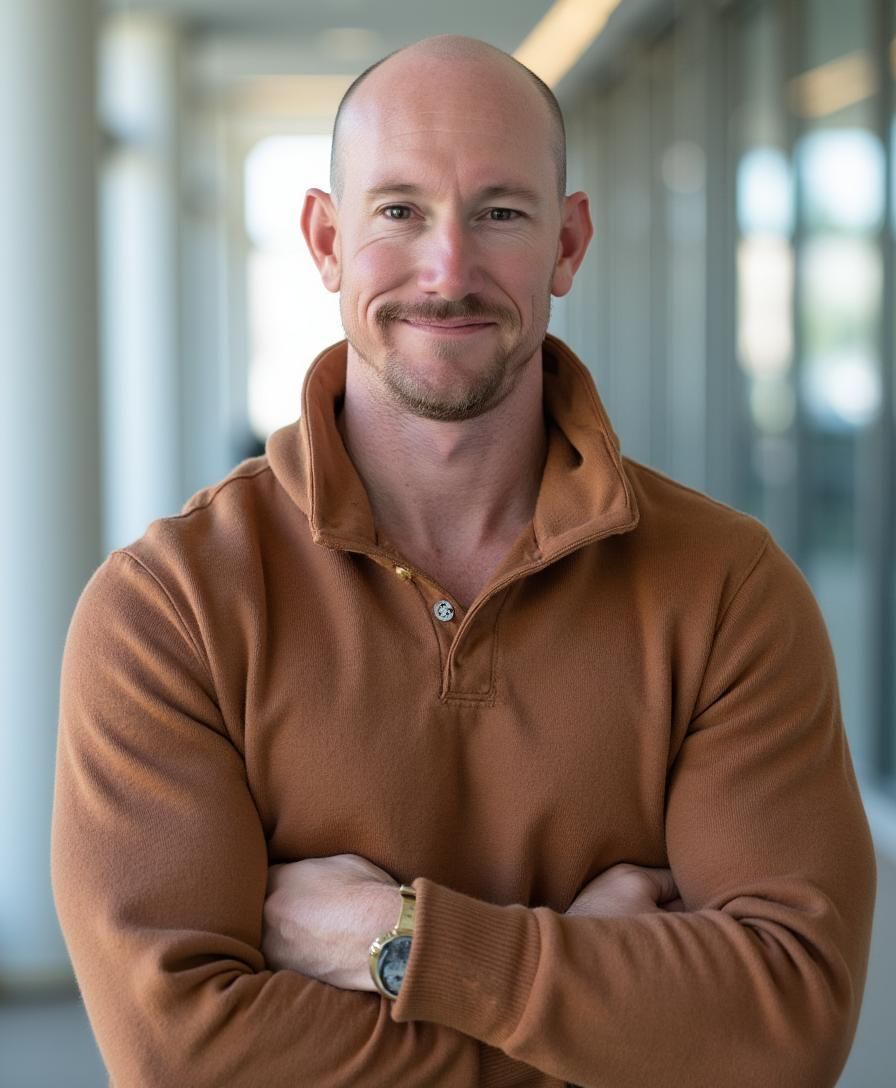
Research and teaching you may have already come across
Jared's work has been published, cited, and featured across leading peer-reviewed journals, textbooks, and education platforms in the MSK world.






A direction
This course doesn't promise you will be safe from the rise of AI. What it offers is the ability to understand what is changing, keep your judgment sharp, make your care worth the visit, and build a service the right people can find.
The clinician who is worth seeking becomes irreplaceable by doing the work and understanding the landscape.
Enrol and start tonight.
- Lifetime access, including every future update
- Self-paced video, watch on any device
- The cumulative practice-development plan, built as you go
- Module 1 free to try before you enrol
- BONUS: One month of The Complete Clinician membership included